How to Attract and Keep New and Younger Donors

This article was originally published in the State of the Fundraising Nation - Summer Edition on F&P
Not-for-profits (NFPs) are riding a wave of generosity right now. With interest rate cuts improving buying and giving power to many Australians, charities are seeing loyal supporters giving bigger gifts than before and major donor programs are thriving. Things are finally looking steady again, even comfortable.
But the reality is, the donor base is aging and by 2045 the largest intergenerational wealth transfer in history is set to take place. That’s an estimated $5.4 trillion which will be inherited by Gen X and Millennials. If charities want to future-proof their revenue growth, they need to start reaching new and younger audiences (Gen X and Millennials) today, and that requires a whole new playbook.
Younger donors have different expectations that charities need to deliver on in order to build trust and relevance. They want to feel more connected to the cause, they highly value transparency, and have higher demands on proof that their contribution makes a tangible difference. Meeting these expectations requires an increased level of storytelling, more visibility, and new ways of building trust.
So where to start? Let’s take a deeper look at who these donors are and how they decide who to trust.
Understanding what younger donors want
Younger donors' expectations are shaped by the digital-first, hyper-personalised experiences they encounter every day across brands, entertainment, and social platforms. Here’s what carries weight for this group:
Personalised messaging
Younger donors expect your communications to feel tailored to their interests and available on the platforms they use. They discover causes through Instagram reels, TikTok explainers, podcasts, and news apps, not just appeals in the mail. Reaching them means creating content that feels native to these spaces, with language and visuals designed for digital discovery…that the social algorithm likes.
Connection to cause and impact
In ntegrity’s 2025 Australian Charitable Giving Survey, 51% of NextGen donors say that making a tangible impact on a cause they care about is their primary reason for giving. When choosing a charity, 47% said a key factor was the ability to see a clear impact from their donation. Focusing solely on need will not help this audience to feel confident that their contribution makes a tangible difference. Proof of impact is of utmost importance.
External validation
Edelman’s research shows that 63% of people don’t trust what brands say about themselves. Younger generations are much more sceptical and look for social proof, independent media coverage, and advocacy from trusted influencers or peers, weighing out all these trust markers together before they believe your message. Key campaigns should include a strong PR and media element.
Seamless experiences on digital
For younger donors, digital is not just another channel. It is the main way they come to know your charity, form perceptions, and decide whether you are an organisation they can trust. From your social presence to your website content to how quickly your site loads, every interaction signals credibility or erodes it. If a donation experience isn’t mobile first or has a single click digital wallet check-out option then many will abandon your site.
All of this points to one thing: you need to go much further in providing proof that your programs work. A younger audience won’t just trust what you say, they want evidence. And delivering that evidence consistently to build trust depends on more than just powerful key appeals.
It takes storytelling to engage and build trust, and fundraising to convert that into action. The right mix of both can turn those who are cause-curious into cause advocates, creating spokespeople who will spread your story further and attract more new donors.
How to attract new and younger audiences
 Familiarity and trust needs to be built over time for new and younger audiences, and that’s where brand plays a vital role.
Brand storytelling is your foundation. Compelling stories that align with your fundraising asks and connect with potential supporters, as well as being transparent with your impact is what builds trust and recognition for these donors. So when you do ask for support, new and younger audiences see you as relevant and trustworthy, not a stranger flooding their social feed with asks.
Here’s how fundraising and brand should work hand in hand:
Brand gets people to care and trust. It’s the foundation that makes your work visible and credible, building a larger audience for future asks.
Fundraising gives them the opportunity to act. It turns attention and trust into tangible support.
For new and younger donors, the combination of compelling brand storytelling and a related ask is what makes growth in new supporters possible.
Here are three non-negotiables if you want to acquire new and younger donors today:
Define your donor audiences and understand their motivations and where to reach them (fundraising)
Prime them with propositions and trust markers that shift attitudes and behaviour (brand)
Optimise every step of the digital journey so conversion is inevitable (brand and fundraising)
The charities making the strong strides with new and younger donors create space for brand and fundraising to work together.
 An example of a strong fundraising brand that tells a story - Medical Teams International.
Now let’s dive into the details of each.
Step 1. Define, find and reach your new donors
Acquisition is about recognising who sits just beyond your current base: the cause-curious, the cause-aligned, and the NextGen audiences who are ready to care, if only you meet them where they are.
The first step is precision: knowing exactly who you’re trying to reach and where they are. Tools like lookalike modelling (where you have existing younger donors), search intent data, and behavioural signals from your website and socials can help you identify audiences just beyond your current base.
To reach these audiences, search remains the top channel for acquisition, because cause-aligned and cause-curious audiences are always looking for ways to support what matters most to them, all year round. And remember, search is happening beyond Google. So consider how you’re present for AI search, social search, YouTube, Reddit or other channels where your target audience is.
While search is about capturing existing demand, now you know your audience and their motivators it’s also time to create demand for your cause, which will show up in increased search. Effective techniques at cause demand creation include:
PR and media coverage that establishes you as a trusted voice.
Activating your CEO or leaders as visible spokespeople, using authentic, low-fi videos.
Influencer and ambassador partnerships that bring credibility and personality.
Behind-the-scenes and impact content that builds transparency.
Always-on paid media to build awareness, feed algorithms, and capture new audiences cost-effectively.
The goal is not one-off reach, but a constant presence that ensures you’re discoverable when curiosity or urgency strikes.
Step 2. Prime new donors with the right propositions
New donors don’t wake up one day and decide to give. They need to be primed through repeated, meaningful touchpoints that educate, engage, and emotionally connect before they commit to your ask.
Priming is about offering propositions that educate, engage, and emotionally move people, not just hitting them with a “Donate Now” button.
What this looks like:
Always-on brand content that keeps your cause top of mind.
Authentic social content or influencer partnerships that spark trust and credibility.
Campaigns that lean into the three core motivators for giving: need, urgency, and impact.
Entry points beyond traditional fundraising language. E.g. petitions, pledges, or micro-giving products that make it easy to act in ways aligned with their values.
As digital trends show, content doesn’t need to be expensive, but it does need to be authentic, respectful, and relevant. Influencers and ambassadors can play a powerful role here, offering both credibility and personality to your cause.
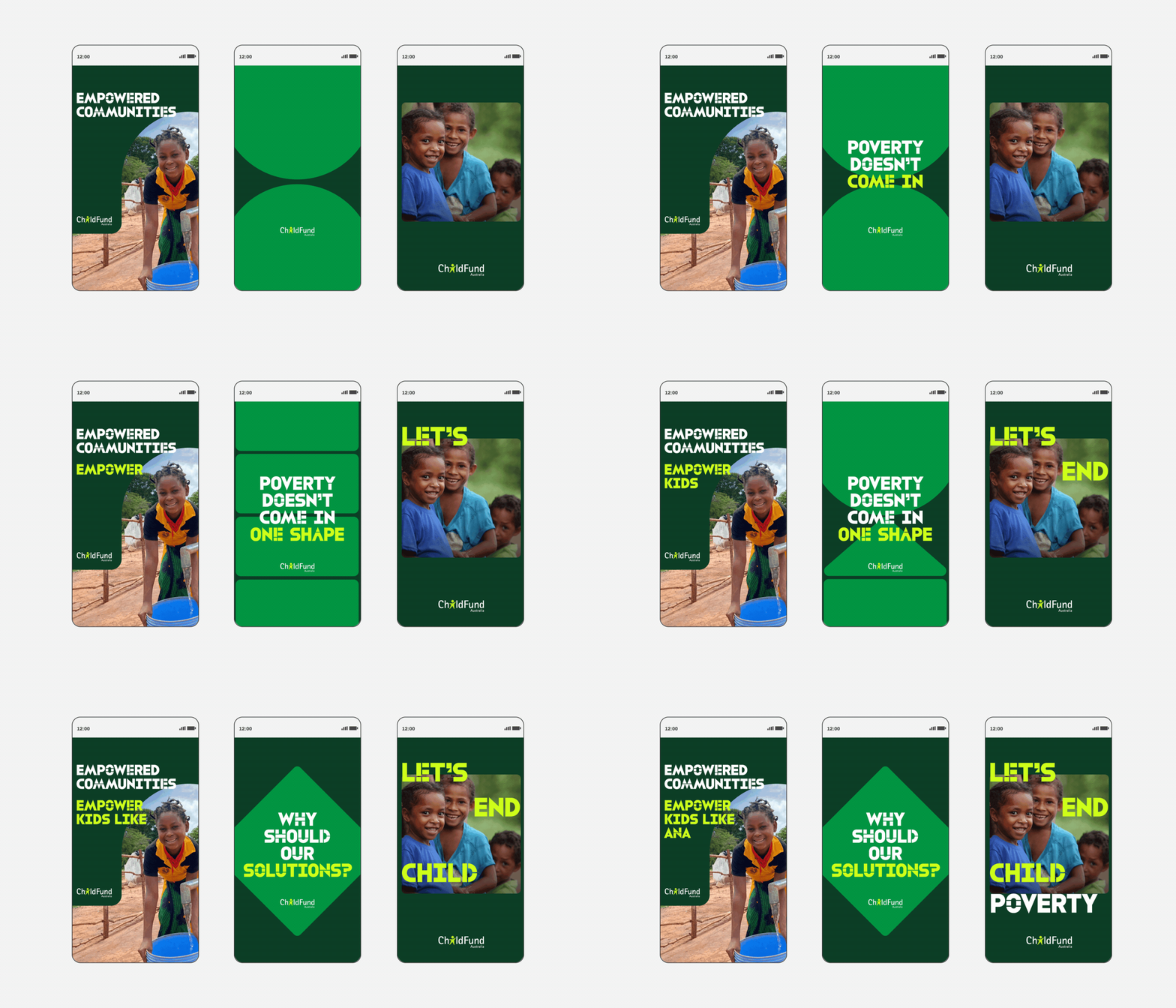 An example of always-on brand content - ChildFund Australia
Step 3. Optimise Your Digital Presence to Support Conversion
After all that effort to bring in audiences, it’s time to optimise for conversion. Every step needs to feel seamless, mobile-first, and easy. Donation pages should be fast, frictionless, and rich with proof of impact. Campaign landing pages should echo the same urgency, need, and tangible outcomes that drew them in.
Why this matters: conversion doesn’t just get you a gift today — it sets the stage for lifetime donor value. A positive, trustworthy digital experience makes someone more likely to come back, give again, or step up to regular giving.
How to get younger donors to give again
A new donor’s first gift, especially a younger donor, isn’t an act of loyalty (yet), it’s a test. At this stage they are still a lead, trialling your organisation to see if you deliver on the promises that inspired their donation. And with digital acquisition second gift rate still sitting at around 20-40% (a bit behind other channels) it’s critical you have a strong retention plan in place – that’s personalised to younger donors.
Send a personalised thank-you email (not just a branded receipt or welcome) that speaks directly to what they care about to set the tone for trust and start the relationship on the right foot. For next practice actions, consider a targeted social media thank-you, and a survey to better understand why they gave, what they’re interested in.
From there, the focus is connection. Prove impact early and often through stories, updates, and evidence that their gift made a difference. This can be bite-sized digital content on social, triggered milestone report backs, or event (in person or online) invites.
Then as the relationship deepens, invite them to give again at the right moment – based on their behaviour, or on market trends. Have soft asks in your connection communications, micro-giving moments, as well as including them in the right donation asks (i.e. consider only certain appeals, preference towards regular giving).
The secret to lasting donor love
New and younger donors will love you if you meet them where they are. They just have different expectations of communication style and are more sceptical than traditional audiences. To attract and keep new and younger audiences, your charity must understand what they want and then bring brand and fundraising teams together so you can reach the right audiences, prime them, and optimise every touchpoint for conversion and retention.
The next generation is ready to care about your work and support your cause, but only if you give them a reason to know you.