How to run a paid media AI audit to optimise your next digital fundraising appeal

AI is changing how paid media platforms find audiences, place ads and optimise budgets.
For fundraisers who are running campaigns day-to-day or leading a team, it's important to know exactly what’s changed, but even more important to know what you’re looking for and ask the right questions.
Here's the four-part framework we use to audit paid media accounts, plus a quick look at what's changed in the platforms over the past year.
The latest on ad platforms
Every major platform is now leaning harder on deep learning and a number of automated assumptions, increasingly creative is the key targeting signal in finding the right audience to take action. While that sounds like a subtle change it has important ramifications on how you plan for and structure your next fundraising appeal on digital.
Google: Search ads can now use AI to expand targeting and even change your ad copy and landing page to lift conversions. Meanwhile Performance Max stretches from AI audience targeting to AI placements across the Google network including YouTube, Gmail and display network, then builds an ad based on elements you uploaded.
Meta: Advantage+ now analyses your creative, subject, tone, format, to decide who is best to see your ad. Different creative means different audiences.
Microsoft: Launched its own Performance Max. Smaller reach than Google, but access to an older, higher-disposable-income audience worth testing.
OpenAI: ChatGPT ads are live in Australia. Still early and limited, but worth watching.
It’s worth noting that with the advent of AI overviews in search there has been a drastic decrease in organic website visits. This has resulted in less ad inventory which in turn increases cost-per-click (CPC). We've seen CPC rise as much as 50% year-on-year for some key words.
The amount of change in the past year is reason to actively manage your approach to digital fundaising.
Four areas to focus your audit on
1. Check your strategy has a clear goal
The "best" channel changes completely depending on what you're measuring. A channel that wins on reach can be your worst performer on donations and revenue.
Here’s an example:
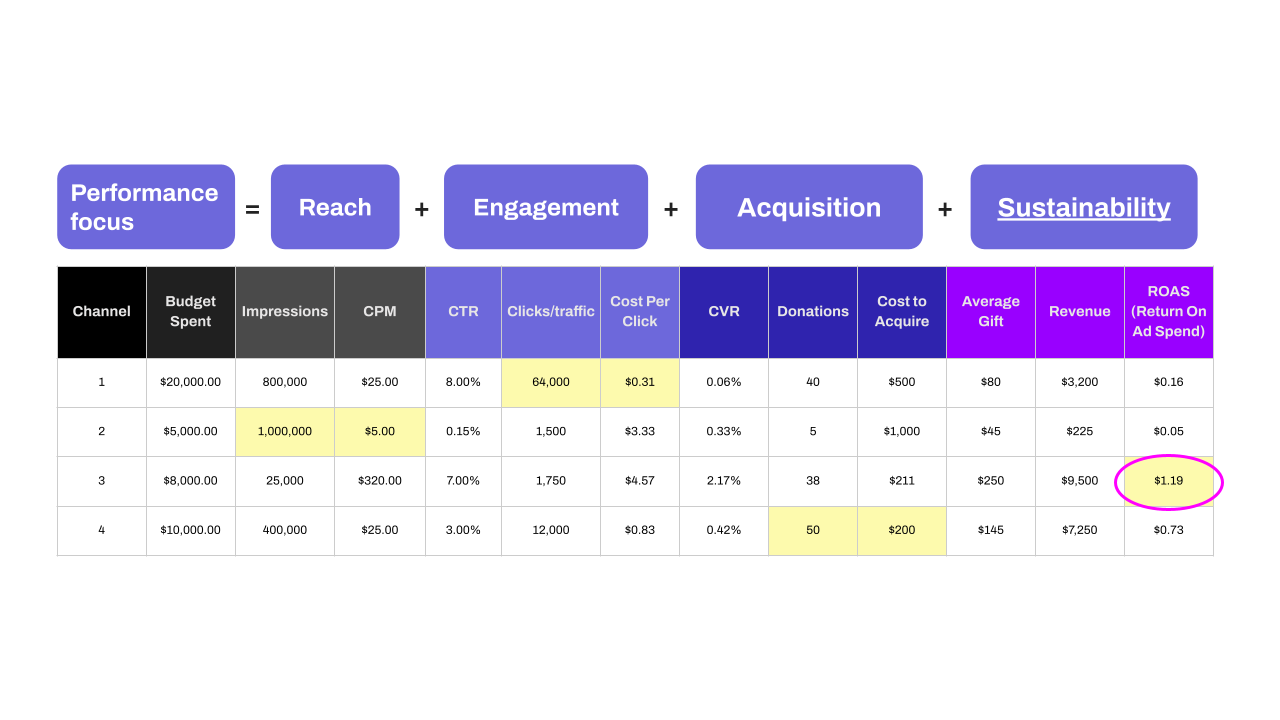 Looking at reach alone, Channel 1 wins hands down. Add engagement, and Channel 1 still looks strong. Add donations, and Channel 4 pulls ahead. But add revenue and return on ad spend, the real measure of sustainability, and Channel 3 comes out on top, despite the smallest audience and the fewest donations of the four.
That's the number fundraisers should be watching: ROAS. It tells you which channel is genuinely worth your budget long-term, not just which one looks busiest.
Action: Decide what you're optimising for before you look at results, and make sure conversion tracking (Google Tag Manager, the Meta Pixel, your CRM) is properly connected. Don’t optimise on guesswork.
2. Check you're using AI tools effectively
Most ad platforms now have a built-in AI chat feature that can explain a spike in cost or conversions faster than you could manually. Use it as an audit assistant, not an oracle. It doesn't know your campaign goal, so treat its answers as a starting point and cross-check them with your goals.
The same logic applies to creative. Because platforms now target based on creative, having variety is absolutely crucial for greater reach to your target audience on these platforms. A $2,000 Meta budget supports around five ad variations; by $10,000, ten or more makes sense. One rule regardless of budget: never upload identifiable donor data into an unapproved AI tool. Use de-identified data only.
Action: Use AI to speed up analysis and diversify creative, but ensure a real human from your team is making the final call.
3. Understand what you're budgeting for
Ad costs move for reasons that have nothing to do with account performance: seasonality, competition, and scale. Christmas and EOFY are both high-cost, high-intent periods. At EOFY, Google Paid Search CPC runs roughly double what it does at Christmas, but the higher click-through rate usually more than makes up for it in revenue.
The bigger issue we see is budget split. Most Meta accounts have it backwards, 80–90% sitting in reach and traffic, only 10–20% in conversion.
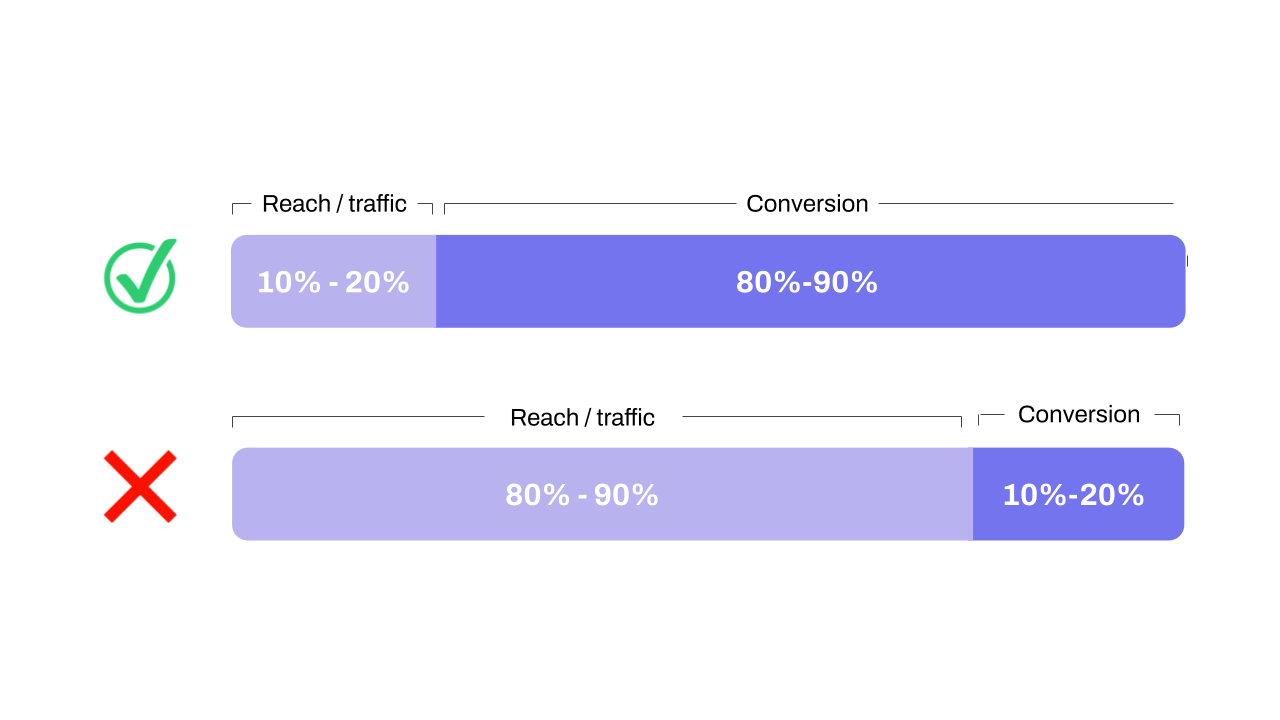 Action: Flip the split. Put 80–90% of Meta budget toward a revenue and donation-focused objective. As a rough guide, $20k+ supports a solid two-channel core (social and search); $50k+ opens up video and programmatic; $100k+ starts to make omnichannel campaigns worthwhile.
4. Prioritise testing and learning
AI will keep evolving inside these platforms, so "set and forget" isn't a strategy. Your first-party data (website visitors, social engagers, mailing list sign-ups) remains your best-converting audience. Lookalikes are a solid next step, but don't stop there, test broader audiences too and let the platform's targeting do the work.
The same applies to channels. Don't assume your current primary channel is your best one. Put aside at least 10% of a larger budget to test an alternative, Performance Max, Microsoft Ads, Reddit, TikTok, or Spotify. If a test channel delivers fewer donors but stronger revenue and your goal is revenue growth, that's your signal to shift budget toward it, even if it feels counterintuitive.
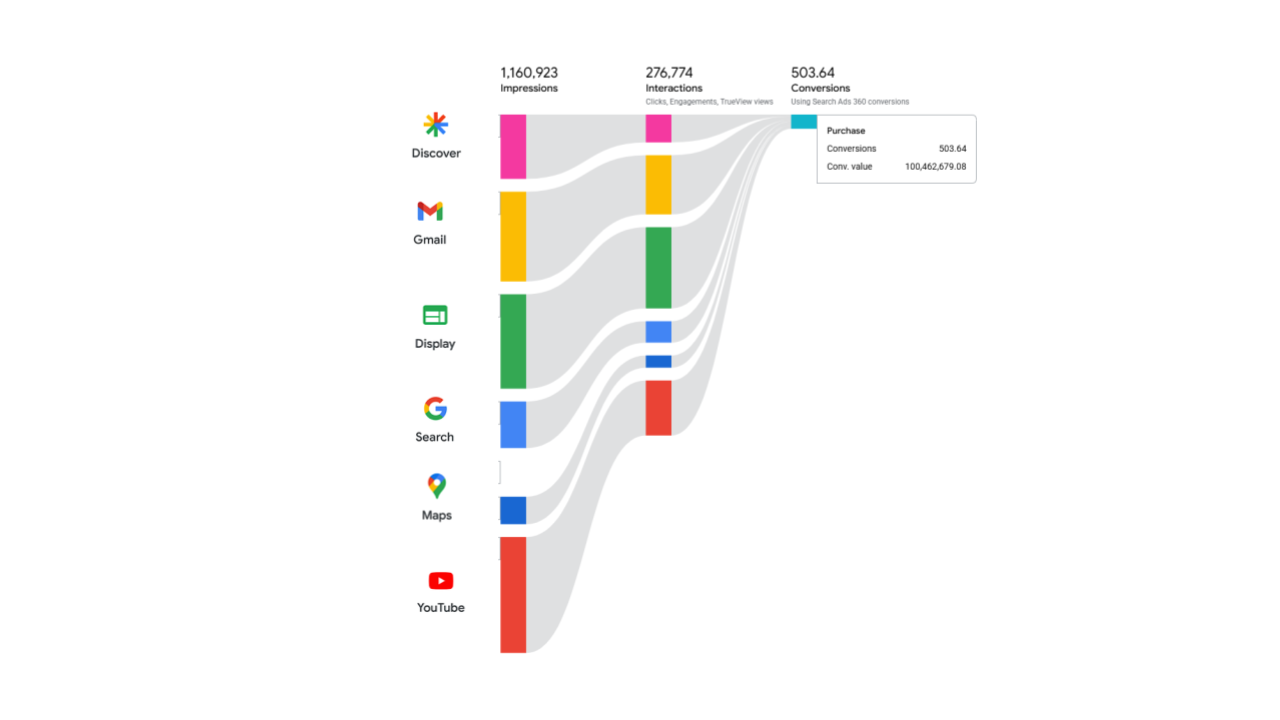 Action: review post-campaign reports channel by channel. In one report we reviewed, mobile push notifications and referral revenue jumped several hundred percent year-on-year while email and organic search declined, a clear signal for where the next campaign's budget should go.
Red flags to look for
Whether you're managing the account yourself or reviewing your agency's reporting, these are the signs your paid media needs attention.
Reports focus on impressions and clicks, not donors and revenue
All creative looks the same, no video in the mix
No conversion rate target or reporting
Donation and revenue values aren't passed back to the ad platform
No testing framework in place
No cost-per-acquisition or ROAS target
Budget spread too thinly across too many campaigns
AI has changed the playbook, but not the fundamentals. Clear goals, disciplined budgeting, active management, and constant testing still win. Get those right, and AI becomes a powerful catalyst for your fundraising performance.
Interested in a paid media audit?
We'll help you find where your paid media budget is working hardest, and what to optimise.