Planners vs. Responders: The Two Donors Every Christmas Campaign Needs to Win Over and How

This article was originally published on F&P.
Every year at ntegrity, we run our Christmas donor sentiment survey to understand giving behaviours. But this year, the 500 donor respondents we surveyed gave us more than that. They showed us what Christmas really means to them, and that context pointed to a fresh approach needed this year.
Through our analysis, we found three distinct donor behaviours this year, but it's two of them, Planners and Responders, who'll decide how your Christmas campaign goes. We've built four strategies around winning both over. So if you're already deep into your Christmas campaign planning, here's how to set your campaign up for success over the coming weeks.
But first, the headline numbers
75% of Australians intend to give this Christmas, down from 81% last year. But the real story isn't fewer donors, it's tighter lists.
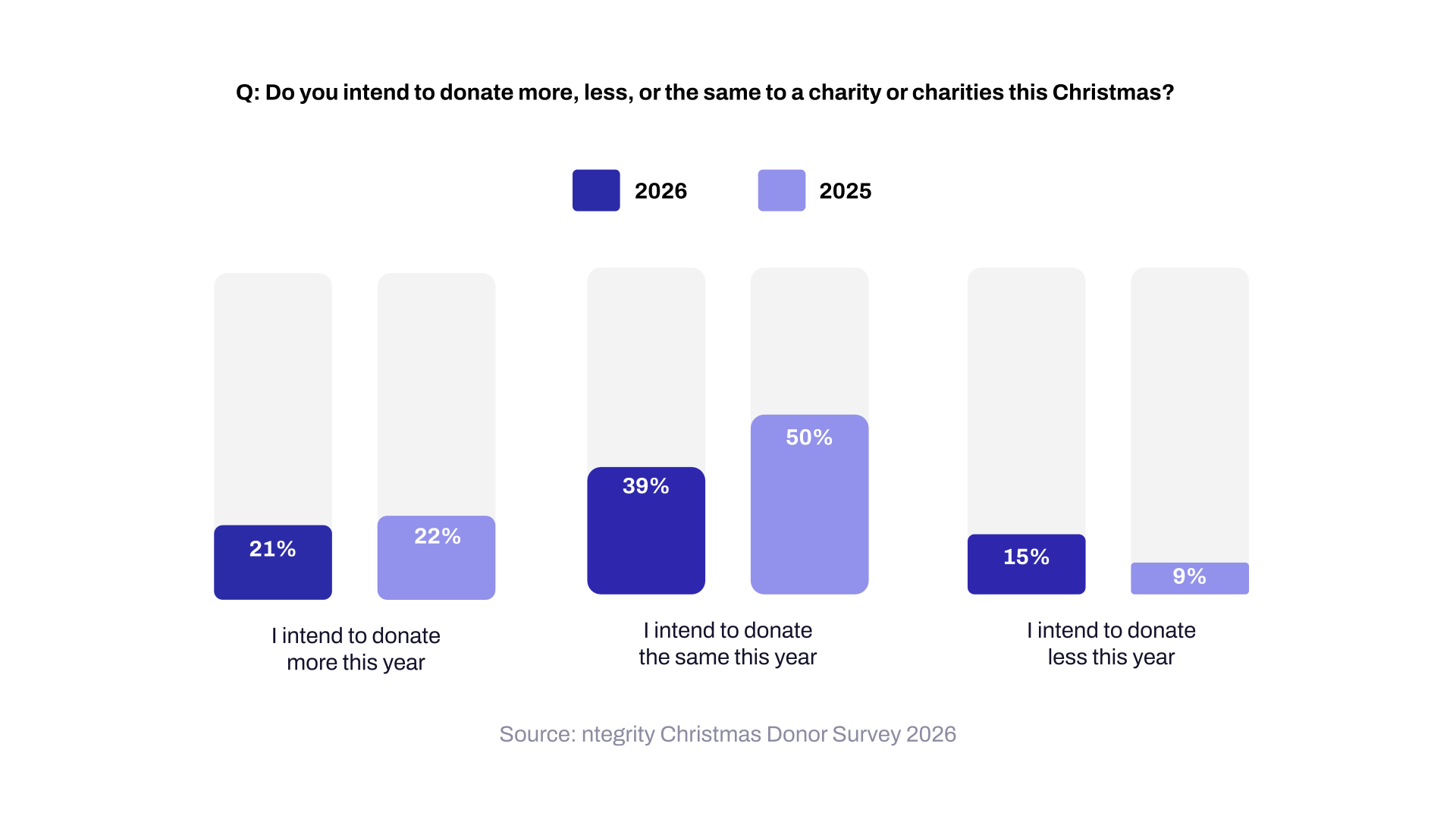
At the same time, donors are becoming more selective about their giving. When asked how much they intend to donate, 24% say they'll give more than $500, up from 16% last year. This means generosity is concentrating around fewer, more trusted relationships. Success this Christmas comes down to how you earn a place on that shorter list.
Three behaviours at Christmas
Our data identified three distinct behaviours in the donor base:
The Planners (26% of the market) give $500+. 76% of them are mid-value donors who plan their Christmas giving well in advance as part of a considered portfolio across several causes. Campaigns that are launched only in November completely miss this group.
The Responders (56% of the market) give $1–500, largely spontaneously, and are more reachable in the moment, with 22% saying Christmas doesn’t necessarily make them more inclined to help. And 38% still undecided about which cause to give to.
The Disengaged (18% of the market) haven't donated in the past 12 months. Cost of living is still a main reason although 12% less than the year before, while a disconnection from causes is a growing reason.
Keep the first two in mind as we get into the four strategies. Your strategy will be different for each.
Four ways to acquire donors this Christmas
1. Give meaning, not just an ask.
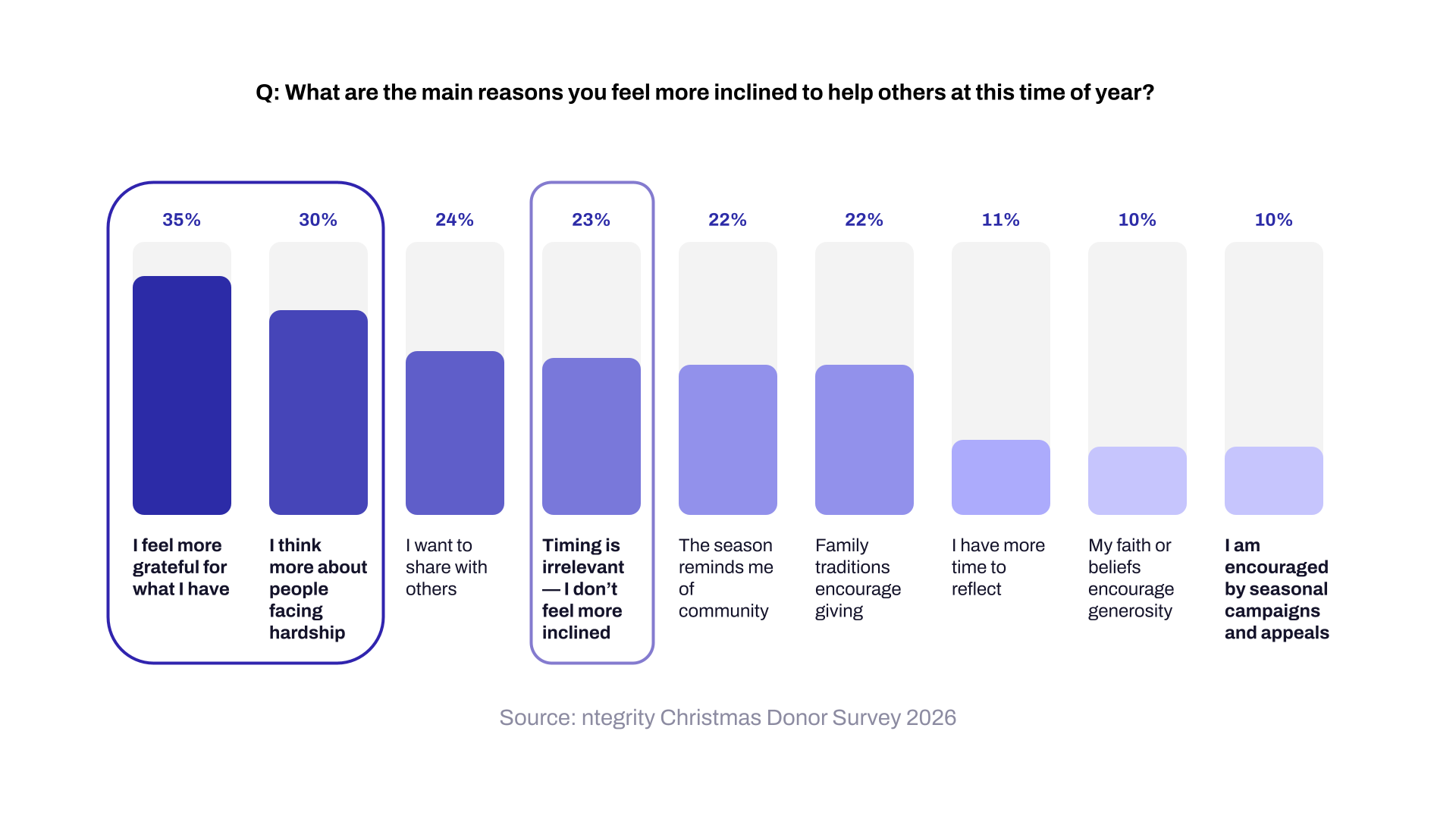 Our data shows Christmas doesn't create generosity, it channels it. The emotional groundwork is already there: donors feel grateful, think more about people doing it tough, and want to share with others. Pair that with rising frustration over Christmas's commercialism and the pressure to overspend, and giving becomes the meaningful alternative to a season a lot of people already find exhausting.
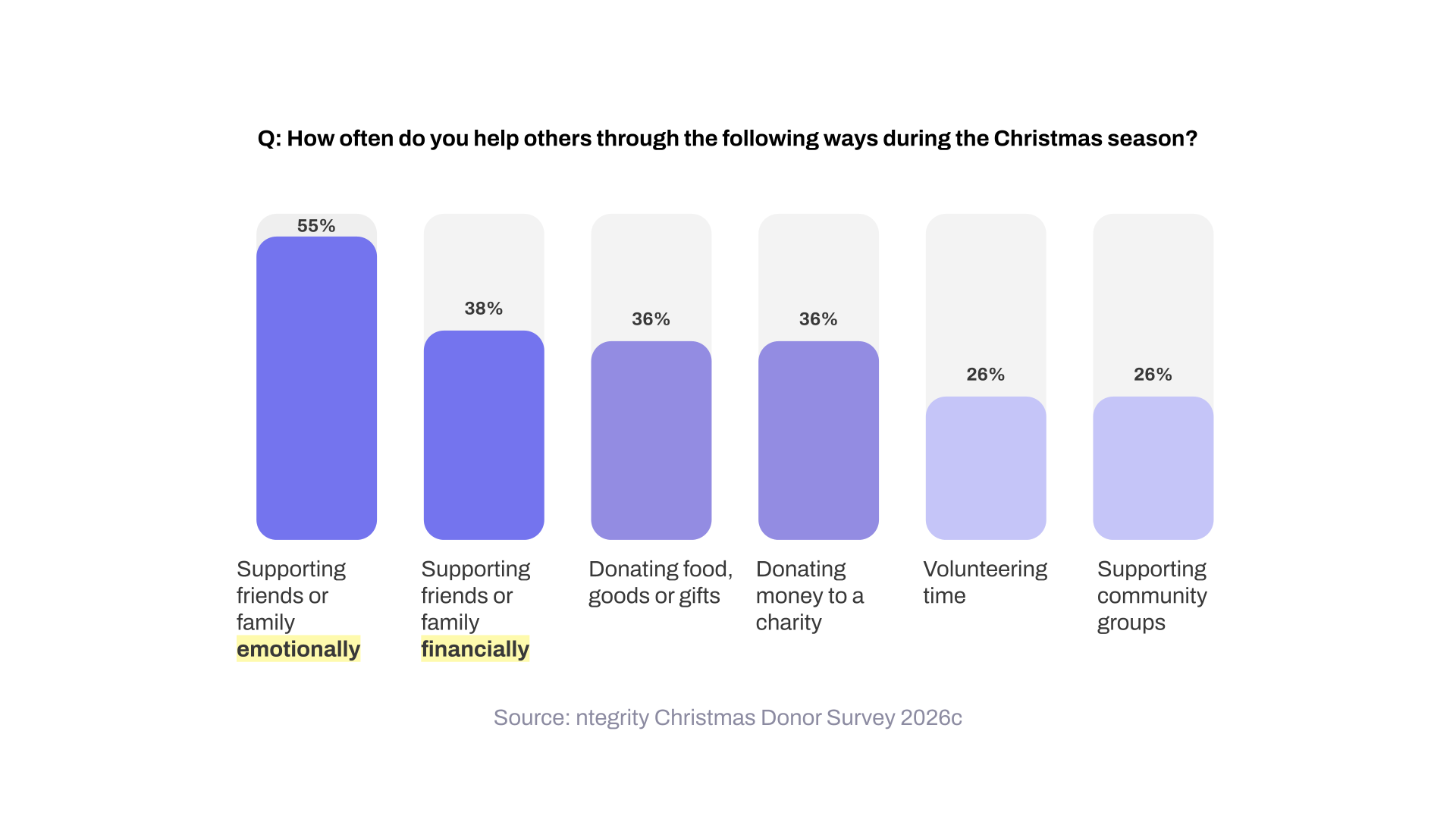 And while most Australians view the season as a time for generosity towards family and friends first, at an individual level, supporting family financially and giving to charity are strongly positively correlated.
Among those who support family or friends financially, 60% also give money to charity. Your role is to show how giving to your cause extends that same instinct beyond their immediate circle.
Design your ask around the donor's headspace: they're thinking about what they have, the people they love, and who might be missing out. Keep your ask tangible and specific rather than a generic appeal, and don't shy away from the word "Christmas" itself. It's still the most natural term for donors with a preference. This plays especially well with your Responders, who give in the moment and respond to what feels immediately meaningful, more than to a polished, long-lead campaign.
2. Be known before you ask, then make the moment relevant
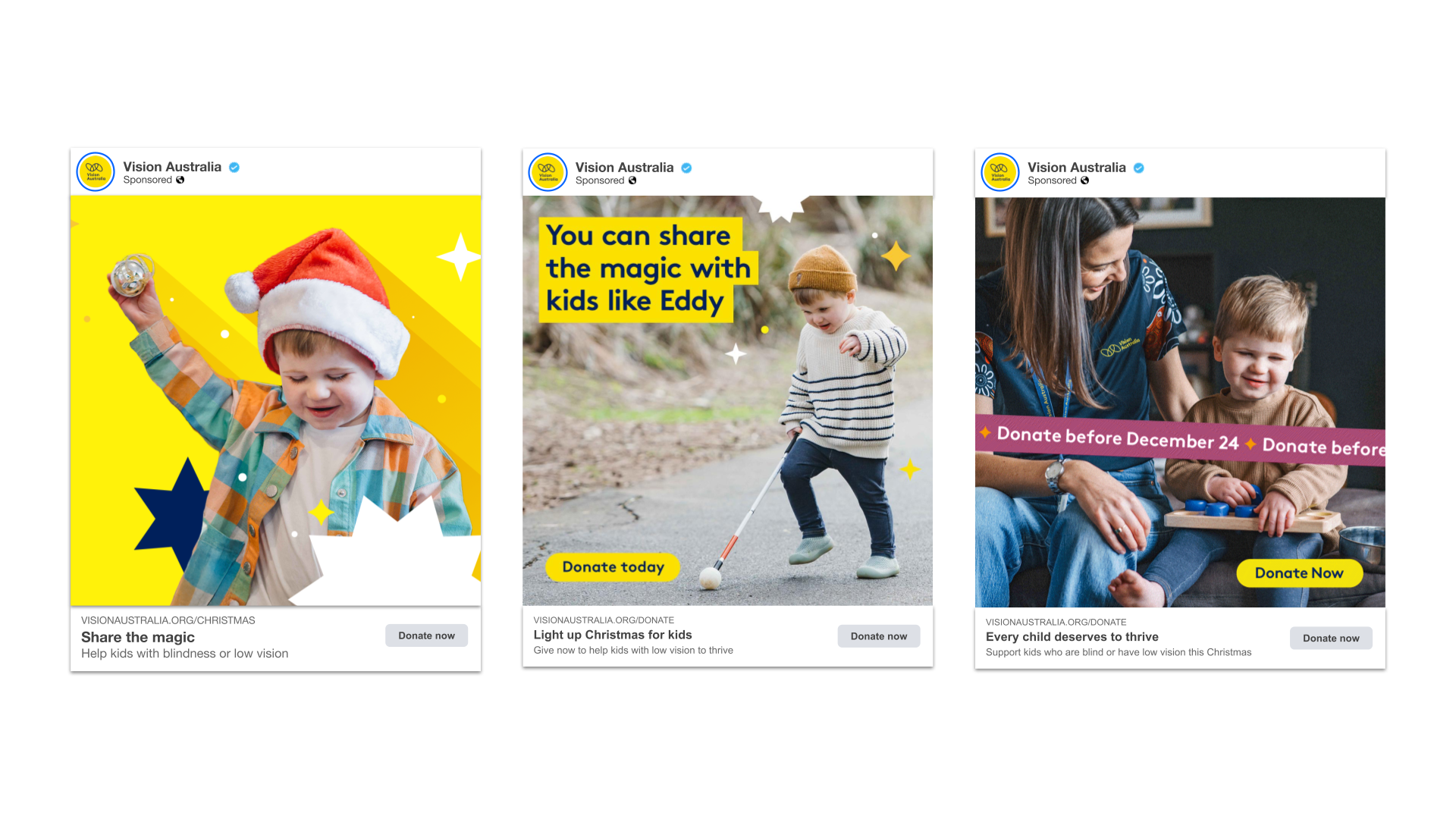
52% of donors intend to give to a charity they already know, but 44% might give to someone new, a real door for acquisition if you build familiarity first. That matters most for your Planners, the 26% of donors who give $500+ and plan months ahead, so reach them in September, not November. It matters just as much for donors who haven't chosen a cause yet, who need a reason to trust you specifically.
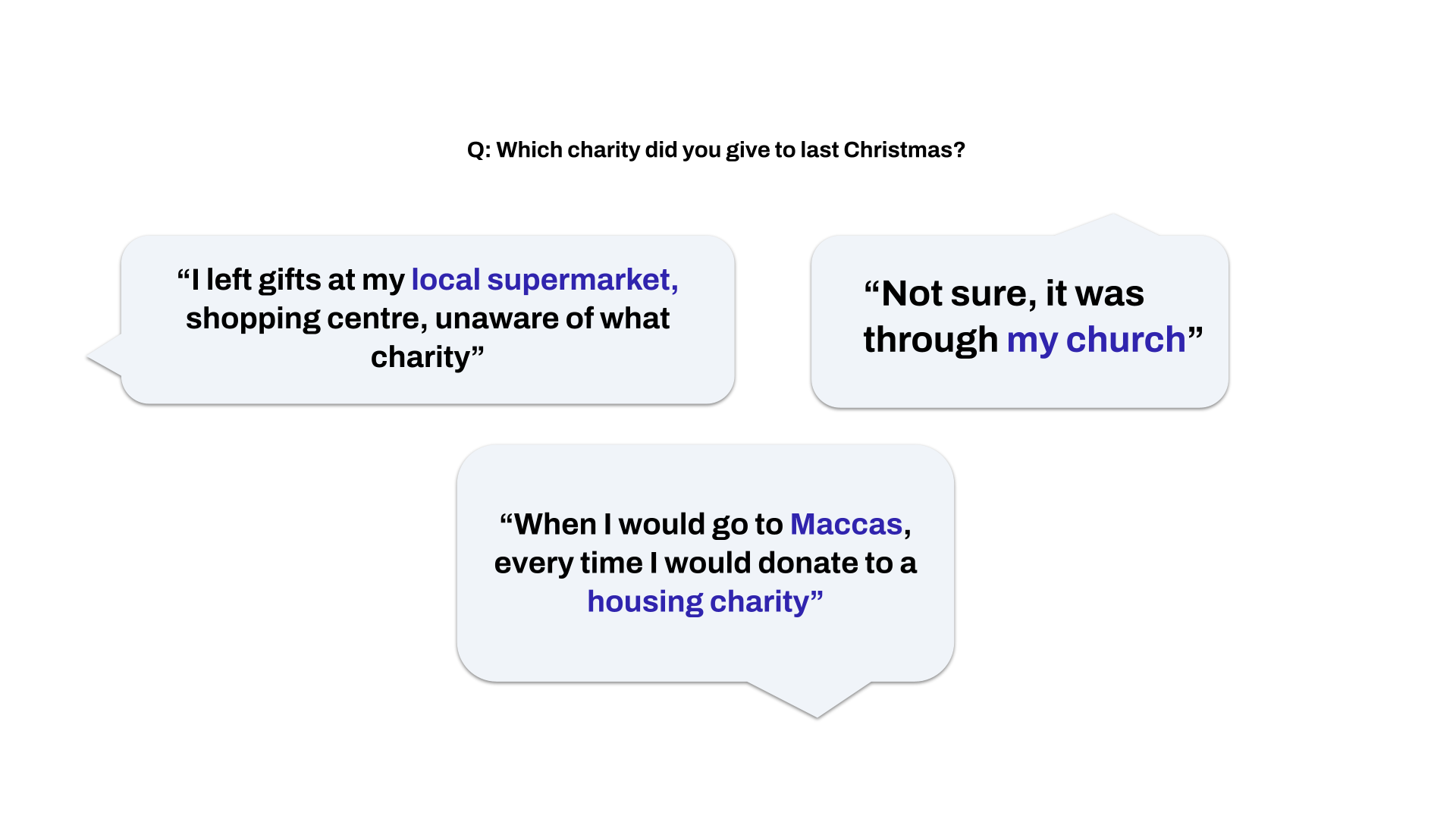 Respondents told us their generosity last Christmas went to a supermarket collection point or through a church, but they couldn't recall the charity involved. That's real generosity with no brand relationship attached, and it's a gap you can close with visibility now.
3. Show your impact before December.
72% of donors rate a clear sense of impact as very important, and over a third say it actively shapes which charity they choose. For your Planners weighing up a portfolio of causes, that evidence needs to land in September and October, well before your December appeal lands.
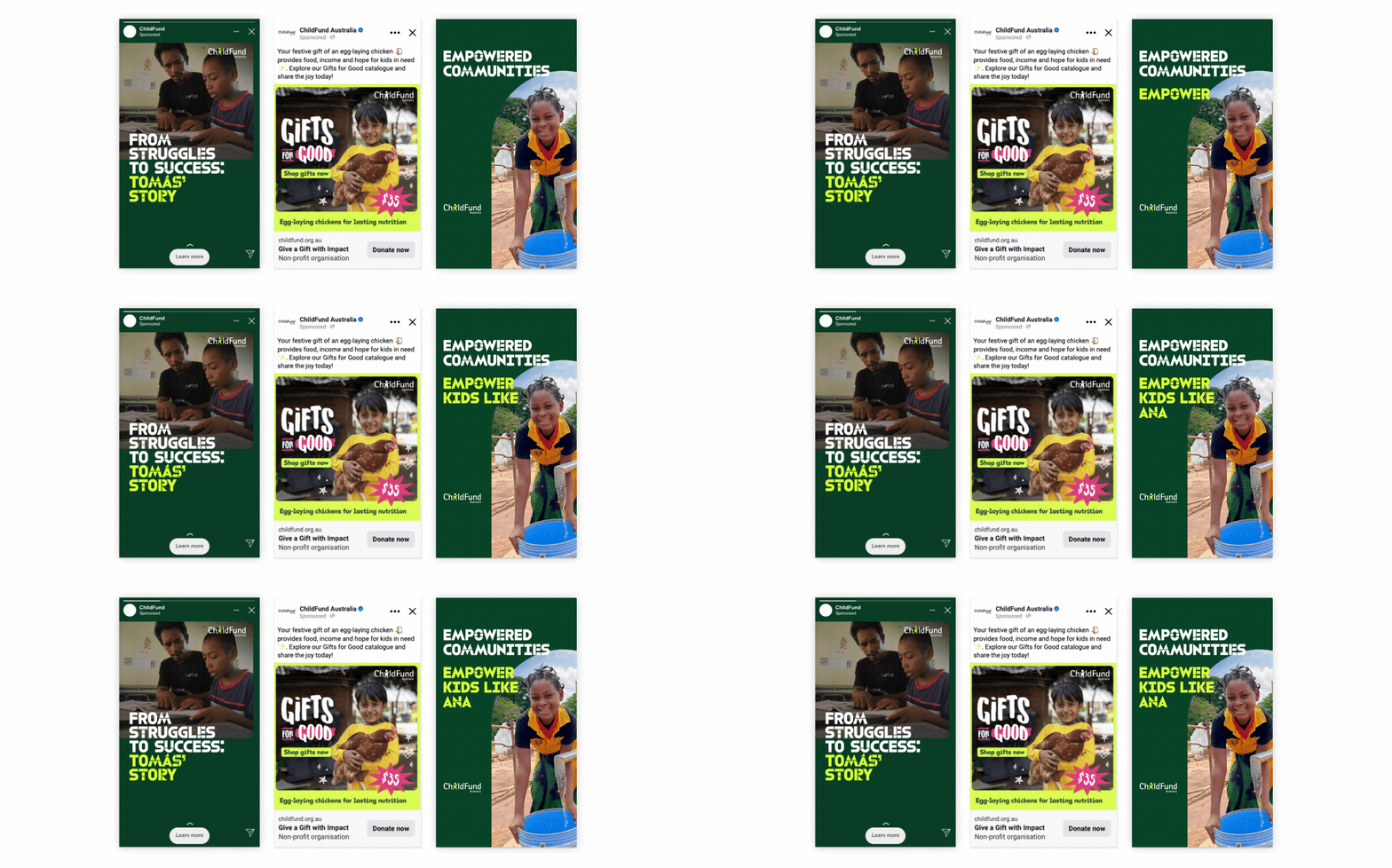
In practice, that means using September and October to remind donors what their support has already made possible, not saving your strongest stories for the appeal itself. Show a clear change: what was happening, what your organisation did, and what's different now because supporters helped.
Then repeat that proof across email, social, video and paid media, so donors encounter the evidence before they encounter the ask.
4. Show up differently at Christmas, while staying true to your cause
Not every donor needs the same push.
Your Responders, 56% of the market, give spontaneously and don't feel especially moved by Christmas itself, so lean on immediate relevance over seasonal sentiment.
Your Disengaged donors, 18% of the market, are increasingly citing non-financial reasons for staying away, a trust and connection gap more than a budget one.
For everyone else, treat Christmas as a chance to test a genuinely new creative angle instead of another version of the same appeal, learnings you can carry into your always-on and tax-time planning too.
Changes on media platforms
As you plan all this, keep in mind what's shifting on the platforms you'll be running it through. These are the latest changes we're seeing, and they'll shape how far your strategy stretches:
Creative is now the main targeting engine.
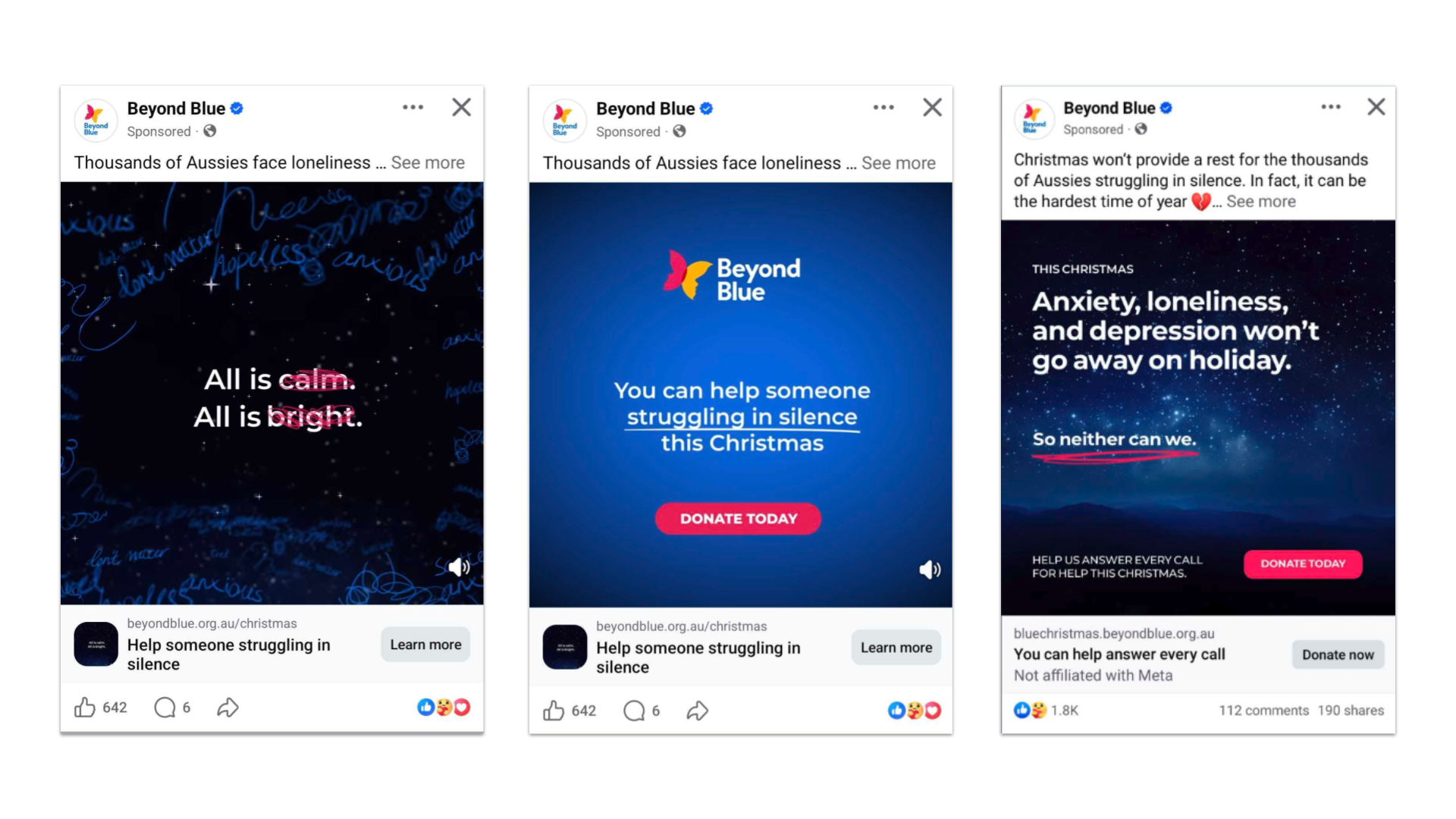
Meta and Google keep moving toward AI-led targeting and bidding, and creative has become their richest signal, and your biggest lever. Testing genuinely different emotional territories teaches the system far more than tweaking a headline or button colour twenty times.
Discovery isn't as straightforward anymore
Google's AI Mode alone has passed a billion monthly users, with people asking longer, conversational questions instead of clicking through a list of links. Visibility now means being understood and well represented across search, social, video and AI-generated answers, not just ranking for a handful of terms.
Video is now a portfolio.
Social video grew 30% in FY26 and now makes up 41% of video spend. Native vertical content, creator and staff stories, and CTV/BVOD where budget allows all need to do different jobs, even when the underlying proposition stays the same.
What to do next
Your campaign may already be built but that doesn't mean you can’t optimise. Here are four things to do right now:
Check your donor list and be honest about who you most need to retain, re-engage, or grow.
Find your open space, what's still flexible in your digital plan, your stewardship touchpoints, your messaging, your donor experience.
Have the conversation with your team now, using this data to agree what you're actually willing to test or change.
Change one thing. Don't rebuild the campaign at this point. Pick the single most meaningful improvement available to you and start it this week.
We've turned all of this into a full 2026 Christmas Readiness Plan, with the specific actions to run in the next few weeks that cover deepening relationships with your highest-value donors, growing your undecided audience, and bringing it all to life with creative that connects.