5 Strategies Behind Successful Digital Monthly Giving Programs
For many not-for-profits, the donor experience effectively ends with a thank you email and a tax receipt. Yet we know sustainable fundraising growth isn't built on a single campaign or channel. It's built on supporters who choose to stay.
The Benchmarking Project found that long-term donors (those giving for 10+ years) represent just 27% of the donor base, yet contribute almost half of total fundraising income. That's why regular giving remains one of the biggest opportunities for securing reliable and predictable revenue growth.
While the focus on acquiring new donors has never been more important, there's often untapped value sitting within your existing donor base. Supporters who have already demonstrated an affinity for the cause but haven't yet been given a pathway to ongoing support.
At ntegrity, we've partnered with some of Australia's leading not-for-profits to build sustainable regular giving pathways that acquire, convert and retain long-term supporters. Here are five strategies we've seen drive regular giving growth.
1. Build a donor growth journey for new cash donors
Regular giving shouldn't be treated as a standalone fundraising product. It should be a natural next step in your donor growth journey.
Too often, organisations invest heavily in acquiring donors during key appeal periods without a clear plan for how those supporters will deepen their commitment. First time donors are testing the experience, still learning about the cause and the organisation and considering if or how they will continue to support.
For organisations with a large pool of single-gift donors, this represents a growth opportunity. Existing donors have already demonstrated an interest in your cause and organisation, making them easier and often more cost-effective to convert into regular givers than acquiring entirely new monthly supporters.
The key is to stop viewing acquisition and regular giving as separate strategies. Every new donor should be seen as a future regular giver, with a journey designed to help them understand the impact of their cash donation and the value they will get personally from becoming a monthly donor.
Action step: Map your current donor journey. What percentage of first-time donors make a second gift? What proportion then become regular givers? And what are the optimal touchpoints between those milestones? Identifying targets and gaps in the journey is the first step to improving conversion.
2. Reduce the barrier of entry to the cause
Not every supporter is ready to commit to a monthly gift immediately. While some will convert right away, most need time to build trust, understand the cause and the impact that your organisation delivers to this cause, they need to develop a stronger connection to both.
This is where a successfully planned two-step conversion strategy comes in.
Instead of leading with a high-commitment monthly donation ask, offer your supporters a value exchange that aligns with their connection to the cause. This is usually a low-barrier action such as downloading an educational resource or signing a petition but most importantly it needs to reflect the values of people who genuinely care about the issue you're solving. If this isn’t done right, you risk a high cost per conversion even if your cost per lead is low.
A successful two-step campaign qualifies high-intent supporters who align with your mission. From there, you can nurture them with impact stories and values-based communication before introducing a recurring giving ask.
Action step: Review your acquisition campaigns. Are you only offering one-time donation pathways to everyone, or are there opportunities to capture and nurture high-intent supporters who may be ready for regular giving later? Identify what would be of interest to your target audience and think of how you can speak to what their donation will support.
 Example: Caritas Australia's 2-step Regular Giving campaign offers a values-based colouring book to capture high-intent leads
3. Focus on monthly giving as the primary ask on your donation page
Regular giving is often treated as a secondary option, hidden behind one-off donation asks and campaign-specific landing pages. But high-performing regular giving programs do the opposite. They use technology and website optimisation to make monthly giving the most visible and frictionless option available. Pre-selecting monthly giving on donation pages can significantly increase monthly donation conversion rates, while upgrade prompts during the donation journey can drive substantial increases in monthly donor acquisition.
Importantly, these tactics work because they reach supporters at the moment they are already considering how they want to help.
Action step: Review your website and donation experience. How many clicks does it take for a supporter to discover your regular giving program? If monthly giving is your most valuable donor pathway, how can you make it the easiest giving options to find and choose.
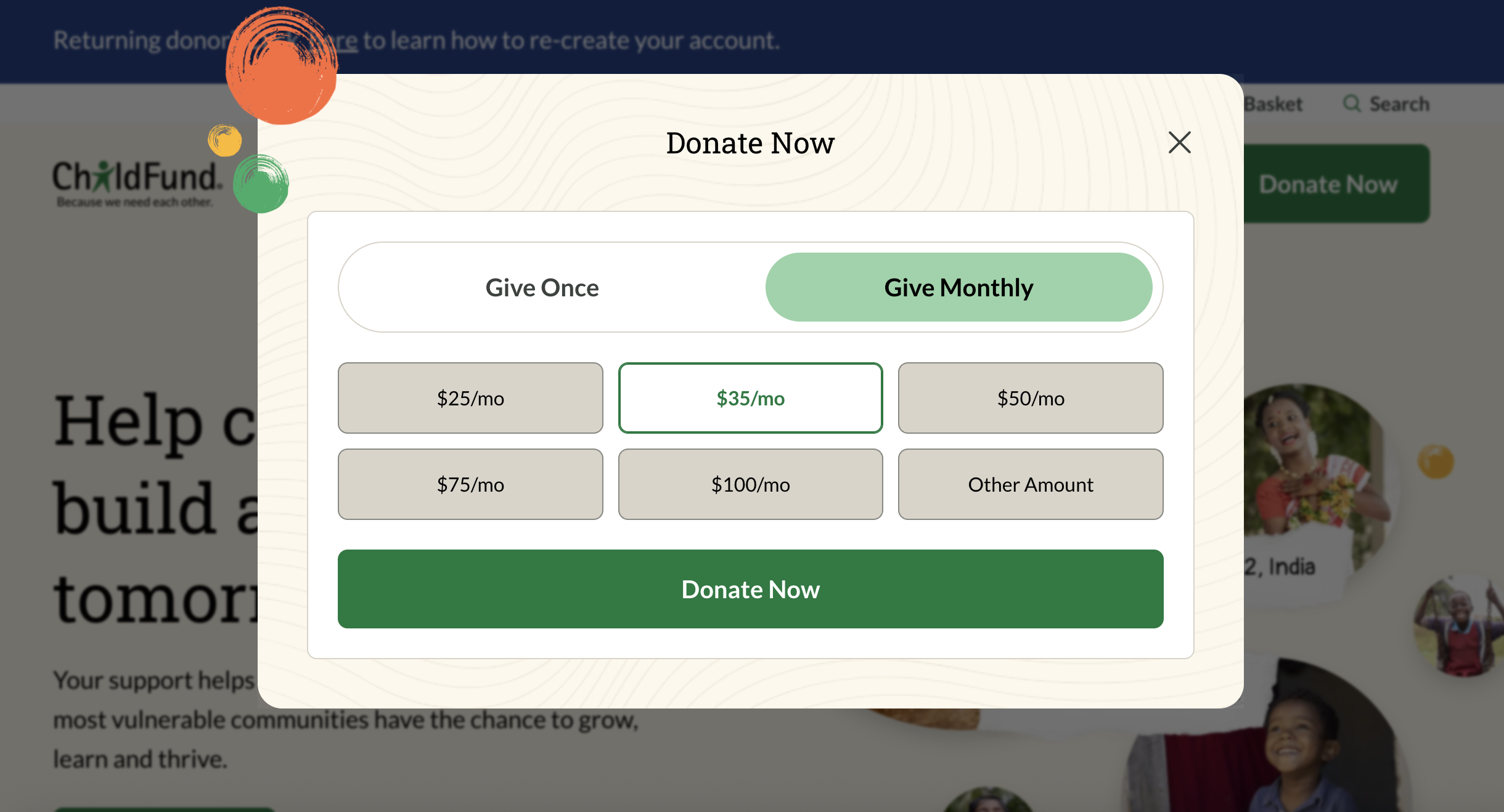 Example: ChildFund’s donation page auto-selects monthly giving and a higher giving tier
4. Align your campaign to an existing movement or cause
A major reason regular giving campaigns struggle is that they are positioned as a generic transactional payment option rather than a meaningful opportunity to deepen impact and build relevance to a cause a donor is already passionate about.
Our donor sentiment report shows that values, need, and impact are the top three drivers for giving. While research and testing consistently show that when supporters understand why monthly giving matters, they're more likely to sign up and stay for the long term.
In other words, many donors need more than a recurring payment option. They need to understand the role their ongoing support plays in creating impact.
For example, ChildFund Australia's Gaza regular giving campaign was built around a simple but powerful truth: while a one-off gift can help respond to an immediate crisis, rebuilding lives takes much longer. The campaign connected monthly giving directly to the ongoing needs of children and families in Gaza, which supports not only emergency relief, but also recovery through education, safe spaces, psychosocial care and the gradual restoration of everyday life.
By clearly showing the difference between immediate response and long-term recovery, the campaign gave supporters a compelling reason to commit beyond a single donation. It helped donors understand that rebuilding communities isn't achieved in a moment—it requires sustained support over time.
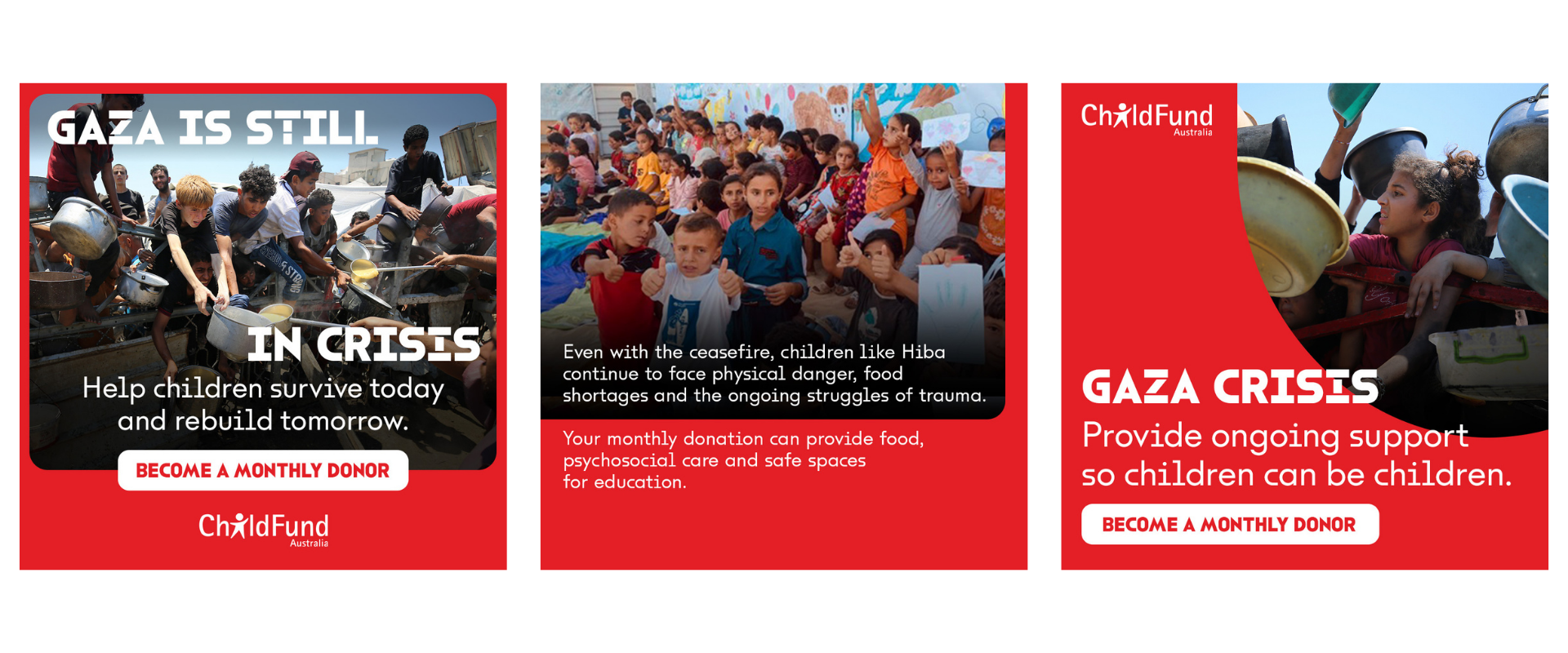 Example: ChildFund Australia’s Gaza campaign creative shows donors how their regular gift makes a clear impact.
Action step: Evaluate your current monthly giving proposition. Is there a cause that you could align to that captures more passion and communicates impact more strongly? Is there a compelling reason for supporters to feel like they are part of something bigger than a recurring line item on their bank statement?
5. First impressions last and the first 90 days are crucial
Converting a donor to regular giving isn't the finish line, it's the beginning of a new relationship.
Data indicates that the first three years dictate whether a supporter stays for the long term, and the foundations for that retention are laid entirely within the first 30 to 90 days (The Benchmarking Project). A high-performing onboarding strategy must immediately validate the donor’s decision and build confidence in your stewardship.
An effective 90-day onboarding journey should prioritise:
An immediate, personalised thank-you and welcome experience.
Dedicated reporting showing how their first month(s) of giving was used.
Exclusive updates or behind-the-scenes insights directly from the program or field.
A milestone communication reinforcing their role within your cause or community.
The goal is to help them feel connected, valued and validated in the commitment they've made. People stay when they understand their role in the mission and the impact it delivers.
Action step: Review your onboarding journey. Does your communication make donors feel deeply valued and proud of their commitment, or does it look like a series of generic transactional receipts?
The Bottom Line
Regular giving is the direct byproduct of a well-designed donor growth journey. It intentionally shifts supporters from their first transaction to a deep, lasting commitment over time.
As you plan your upcoming campaigns, look beyond the immediate acquisition targets. Build a framework to grow your donors. The most valuable supporters your organisation can have are the ones who will still be giving three to ten years from now.